
What makes a company truly great? Unpacking Quality
At Orea Capital, we integrate quality into our investment framework as both a qualitative moat assessment and a quantitative quality score. This dual approach ensures we can combine deep fundamental insight with data-driven discipline.
Why Quality Matters
Quality companies—those with strong profitability, reliable earnings, and disciplined investment—have been shown in decades of research to deliver a quality premium: systematic outperformance over lower-quality peers. However, this premium is cyclical, far from guaranteed each year. Quality stocks can underperform during speculative bubbles or early bull markets, but over the long run, they tend to compound more steadily.
Moats: Durable Competitive Advantages
The moat-based approach focuses on competitive strengths that protect a business: patents, brands, scale economies, network effects, and culture. Companies like Microsoft, Hermès, or Visa have sustained high returns because their moats shield them from competition.
- Moats extend the Competitive Advantage Period (CAP) in valuation, meaning cash flows stay higher for longer in a cashflow model used for valuation.
- Markets often underestimate this, as most analyst models only forecast 3–5 years.
- Investors in wide-moat companies benefit from durable profitability even when short-term sentiment depresses valuations.
Challenges include avoiding oversimplification (not all moats are equal), recognizing that moats can erode (Kodak, BlackBerry), and balancing quality with valuation. Quality stocks have been very popular over the last decade and some of them look quite expensive even after taking into account the moat. Hence, patience and valuation discipline remains important for the long-term investor.
Quality Metrics: What the Data Show
Academics and practitioners use multiple metrics to quantify quality. Four stand out:
- ROE (Return on Equity): useful but can be inflated by leverage or accounting.
- ROIC (Return on Invested Capital): cleaner, showing true operating profitability relative to capital deployed. High ROIC firms consistently outperform.
- CFROIC: cash-based ROIC, stripping out accounting distortions.
- GPA (Gross Profits to Assets): a simple, robust predictor of long-term returns.
Research confirms that high-quality firms outperform, but only if their quality is sustained. Firms losing profitability often deliver the worst returns. Tracking both levels (e.g., ROIC today) and changes (fundamental momentum) is crucial.
Earnings Quality & Safety
Earnings quality is measured by accruals—the gap between reported profits and cash flows. Studies show firms with low accruals outperform high-accrual peers by ~2–3% per year, as reported earnings are more trustworthy when backed by cash flow.
Safety—strong balance sheets and liquidity—does not generate a consistent absolute return premium, but does deliver better risk-adjusted returns. Safe firms fall less in downturns, making safety most relevant in recessions or rising rate environments.
The Investment Factor
Counterintuitively, heavy investment often destroys value. Cooper et al. (2008) found U.S. firms that shrank assets by –21% annually earned +23.9% returns, while those growing assets +80% annually earned only +3.1%. The result holds across global markets.
Buybacks are a powerful sub-variant: high-conviction buybacks (>5% of shares annually) beat the market in 98% of rolling 10-year periods (1987–2014), delivering +3.7–5.8% higher annual returns than low-conviction programs. Returning capital can be better than chasing low-return projects.
How Orea Capital Uses Quality
We often use scoring to generate and classify ideas per sector and monitor positions, alongside traditional fundamental analysis that emphasizes business models, industry dynamics, and valuation.
For core long-term positions, moat strength and high quality scores are non-negotiable. These holdings anchor portfolios with businesses we believe can compound for years. For satellite positions (value, growth, momentum, ETfs), quality may play a smaller role, but excluding the lowest-quality stocks consistently improves outcomes.
Our quality score currently integrates profitability metrics (ROIC, ROE, GPA), earnings quality (accruals, cash conversion), and investment discipline (asset growth, buybacks). Changes in these levels are tracked separately as fundamental momentum, alongside price and earnings momentum. Safety is measured through its own solvency and liquidity framework.
Future Orea Insights articles will cover other domains—Momentum, Growth, Value, Safety, and Risk—showing how they complement Quality in trying to build resilient portfolios.
For readers interested in the full discussion—including detailed research findings, case studies, and Orea Capital’s framework for integrating quality into investment decisions—the complete article is available in here . (Estimated reading time: 20 minutes.)
More insights
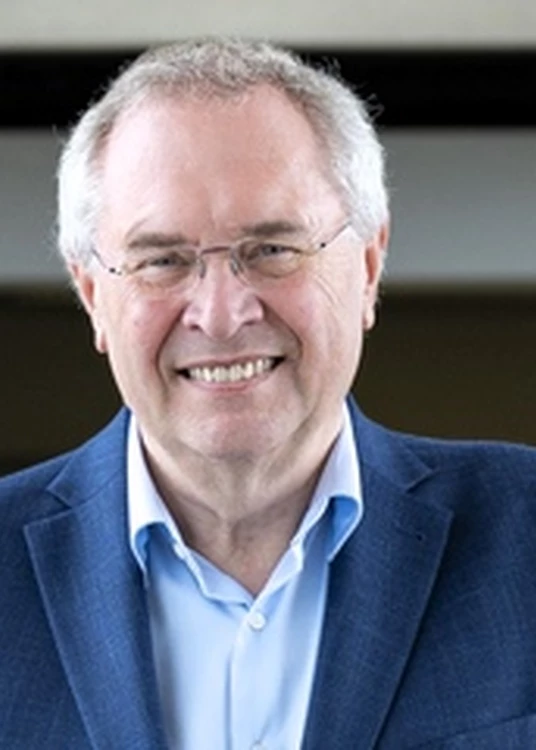
A meeting with... Stefaan Haspeslagh
Stefaan Haspeslagh joins Orea Capital's Board of Directors.
Stefaan Haspeslagh brings extensive financial and governance experience to Orea Capital's Board of Directors. He served for many years as CFO and later COO of Tessenderlo Group, while also serving as Chairman of the Board and CFO of Picanol Group until Picanol's full integration into Tessenderlo.
Today, he is Managing Director at Findar and Koramic. He holds a degree in Applied Economics from the University of Antwerp.
His expertise in governance, acquisitions and long-term growth strengthens Orea Capital's Board of Directors at an important stage in the company's continued expansion.
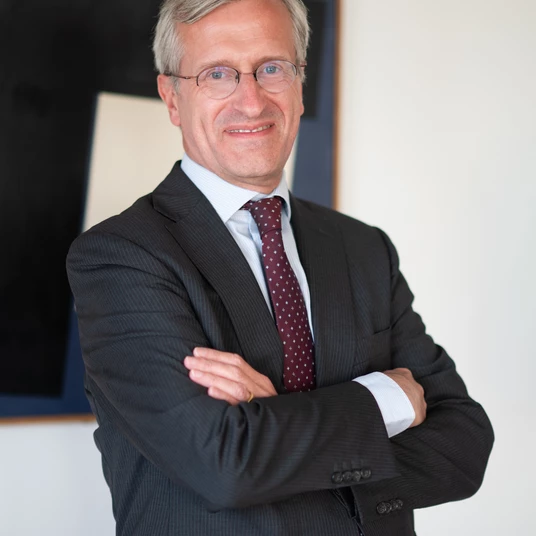
A meeting with... Jérôme Dawans

Orea Capital Strengthens Its Presence in Belgium with the Acquisition of Delande & Cie
With this acquisition, Orea Capital will increase its assets under management to nearly €1.5 billion.

A meeting with... Pierre Lassonde
Some people leave a mark on your life and the world. Pierre Lassonde is one of them, a mentor to Olivier and a true legend in the gold industry.

What makes a company truly great? Unpacking Quality
At Orea Capital, we integrate quality into our investment framework as both a qualitative moat assessment and a quantitative quality score. This dual approach ensures we can combine deep fundamental insight with data-driven discipline.

Welcome, Jonny Van De Casteele
As of July 15, Jonny Van De Casteele has joined the Orea Capital team as Partner / Head Social Profit. With several decades of experience in wealth management, he brings rich expertise for both institutional and private clients. We sat down to discuss the importance of human relationships as a factor for long-term success, the opportunities offered by AI, and the pleasure of calm and silence during a horseback ride.

Welcome, Olivier Fabri!
Olivier Fabri (61) recently joined Orea Capital. “It’s never too late for new adventures,” is his motto. That’s why he decided to leave CA Indosuez to join niche specialist Orea Capital. He took a moment to answer a few questions in a short interview.

A meeting with ... Jacques Mahaux
Jacques Mahaux is a Non Executive Board member at Orea Capital since 2018. Half June 2024 he became Chairman, a perfect opportunity for a conversation about the evolution of the financial sector, Orea Capital's investment philosophy and assets and... antique coins. Moreover, Mr Mahaux also has some ideas for talking points if you were stuck in a lift.

Orea Capital's new website is online!
Clients and prospects now easily find their way to the services that guide them in their wealth management, to our unique way of working and to our team of enthusiastic staff.

Orea Capital opens new office in Knokke
Just before the Easter holidays, Orea Capital opened a new office in Knokke, at Natieënlaan 137.